Choose a place for your custom doll before choosing an available size. A portrait beside a laptop has a different job from one displayed between books or with other personal keepsakes. The useful question is how the figure will fit into the space you actually have.
A little planning can stay simple: name the location, measure its usable area, and keep those notes beside the figure options. Treat design examples as ideas for the portrait, not as scale drawings of the finished object.
Compare the places you would really use
On a work desk, consider the area that remains clear during an ordinary day. A space that looks empty after tidying may usually hold notes, a charging cable or a coffee cup. Look at the desk while you are using it, then decide where a personal figure would remain visible without competing with that routine.
On a bookshelf, think about viewing distance and the objects around the portrait. A figure at eye level may read differently from one at the back of a deep shelf. If books move frequently, consider whether you would be happy rearranging the display each time.
A separate keepsake area can give the portrait a quieter setting. Choose which nearby items belong with its story, such as a card or a photograph you already own. You do not need a whole new display arrangement to make a single figure feel personal.
If the gift is for someone starting work, the first-job doll guide considers how a new desk can reflect the person's interests without making the setting too formal.
Measure the usable area rather than the whole shelf
Record the clear width, depth and height of the exact spot. Account for the shelf above it, the front edge and anything that occupies the same area. A cabinet door, a book leaning into the space or a monitor that changes position can reduce the room you initially thought was available.
Keep a small note with these details:
- The clear area available for the figure.
- The distance from which you usually expect to see it.
- The objects that will remain beside or behind it.
- Whether the display is for one portrait or a future group of separate figures.
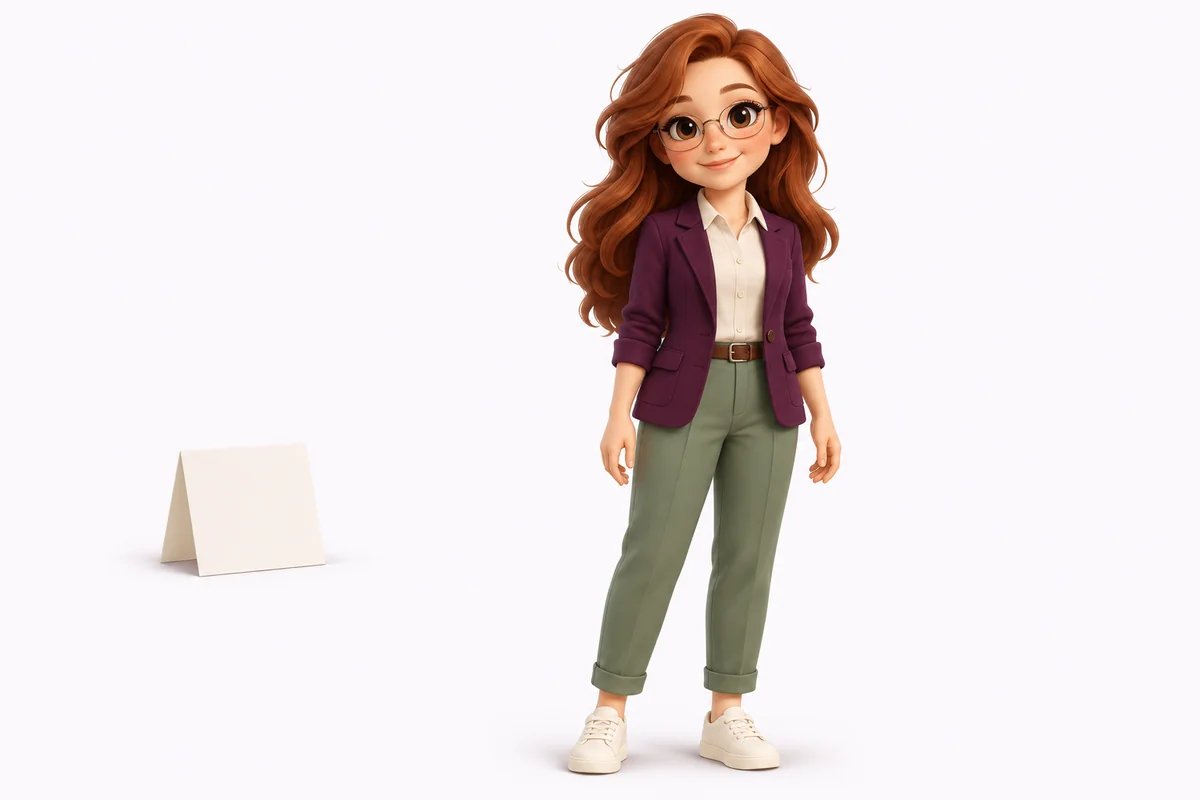
A paper marker can help you imagine where an object might sit. It is only a planning aid until you know the figure's actual dimensions. Do not treat a rough paper outline as proof that a particular pose, base or pair will fit.
For a gift, ask the recipient about the location where possible. If the destination is still unknown, avoid building the whole design around a narrow space you have guessed they might use.
Compare your measurements with the current options
Use the sizes actually offered in the ordering flow. Read what the size label describes, and ask if you need the complete width, depth or measurement method. A height label alone does not tell you the full space required by an extended arm, accessory or connected pair.
Do not judge physical scale from a website picture. The same illustration can appear large on an article cover and small on a card, and a digital chibi design is not a photograph of an item beside a ruler. Your own measurements and the confirmed product information are the useful comparison.
If a particular base, stand or support arrangement is essential, check it with the team rather than assuming it is included. If the location involves an unusual environment, ask the team whether it suits the figure before deciding.
The AI preview review guide explains which decisions belong to the design image and which still need confirmation before a physical purchase.
Leave room for the story to grow
A pair may need a different arrangement from two separate portraits. Decide whether you want the figures to read as one shared composition or as individual pieces with space between them. Ask for the relevant dimensions instead of assuming that doubling a single figure's space will describe every combination.
If you plan to add portraits later, leave some flexibility around the first one. You might keep one shelf for different periods of the same person's life, or place each portrait near the objects connected to its theme. The portrait collection guide helps you plan those separate additions.
Bring the measurements back into the decision before checkout. Confirm the available size and final price, then compare the choice with the location you wrote down. The display should work with a place you enjoy using, rather than depend on a permanently empty corner that does not exist in your daily life.