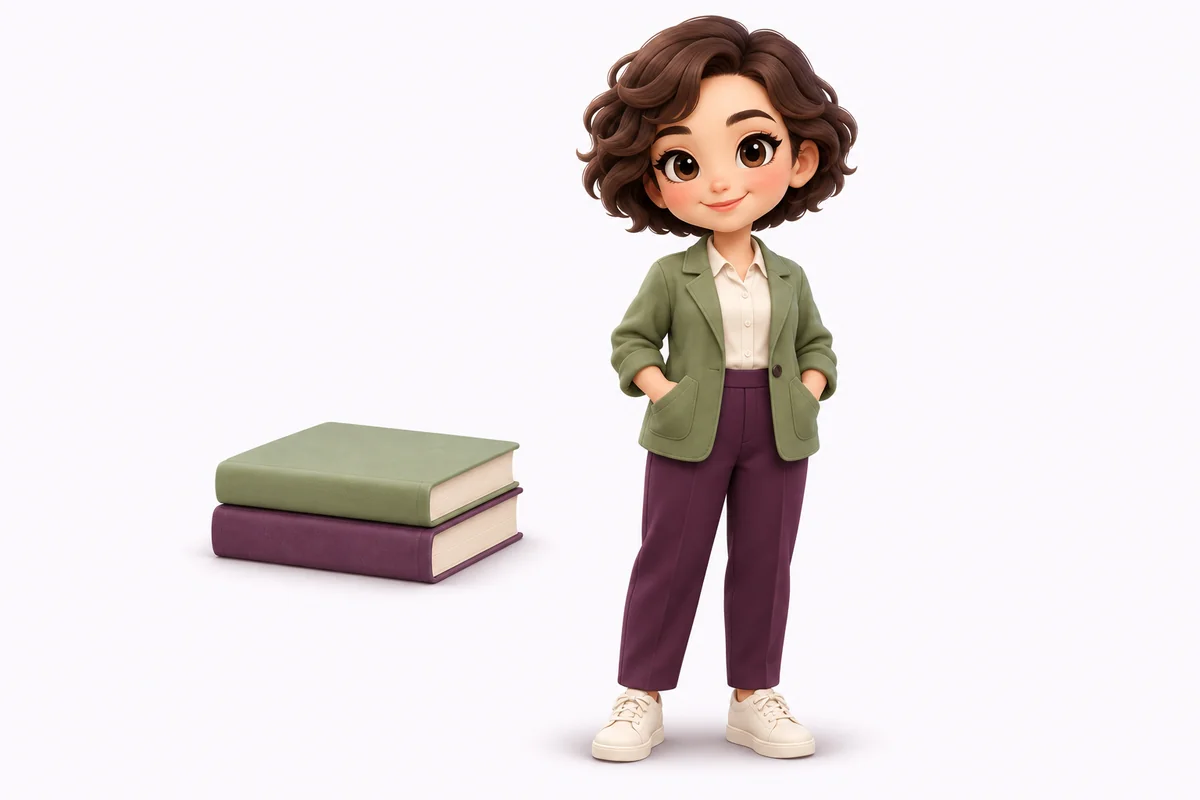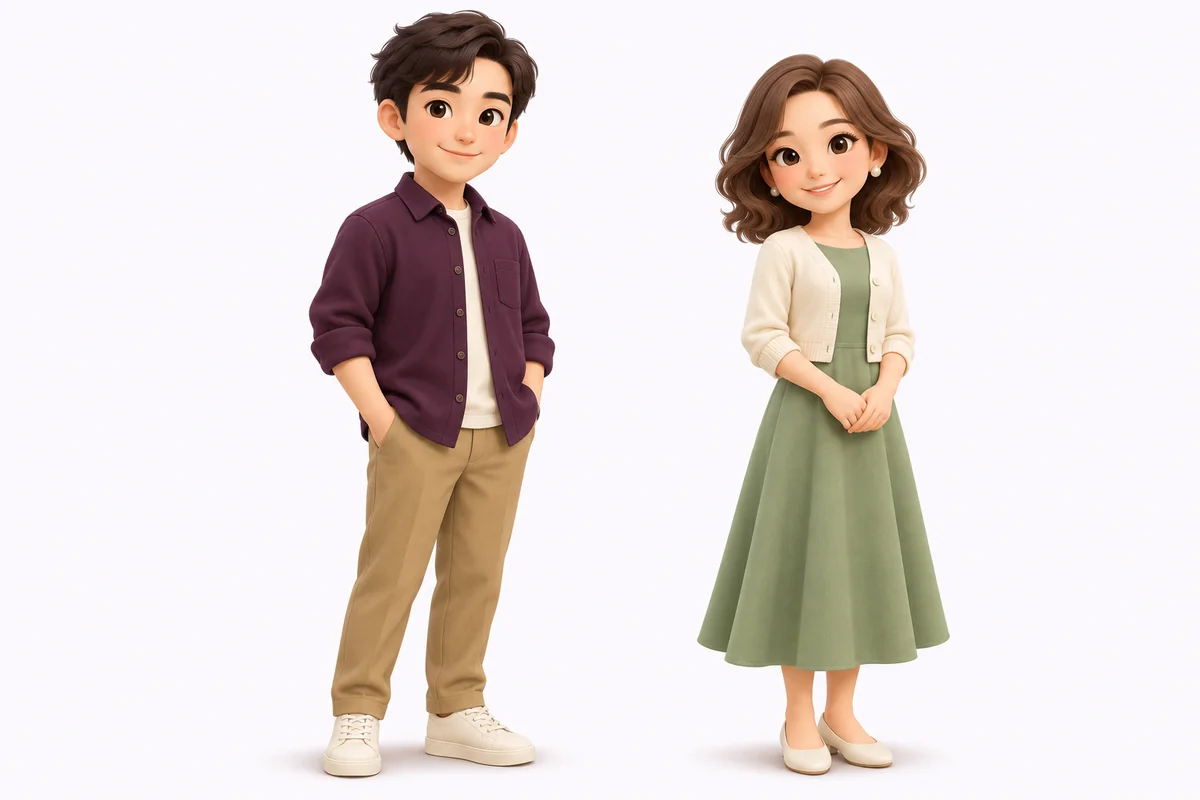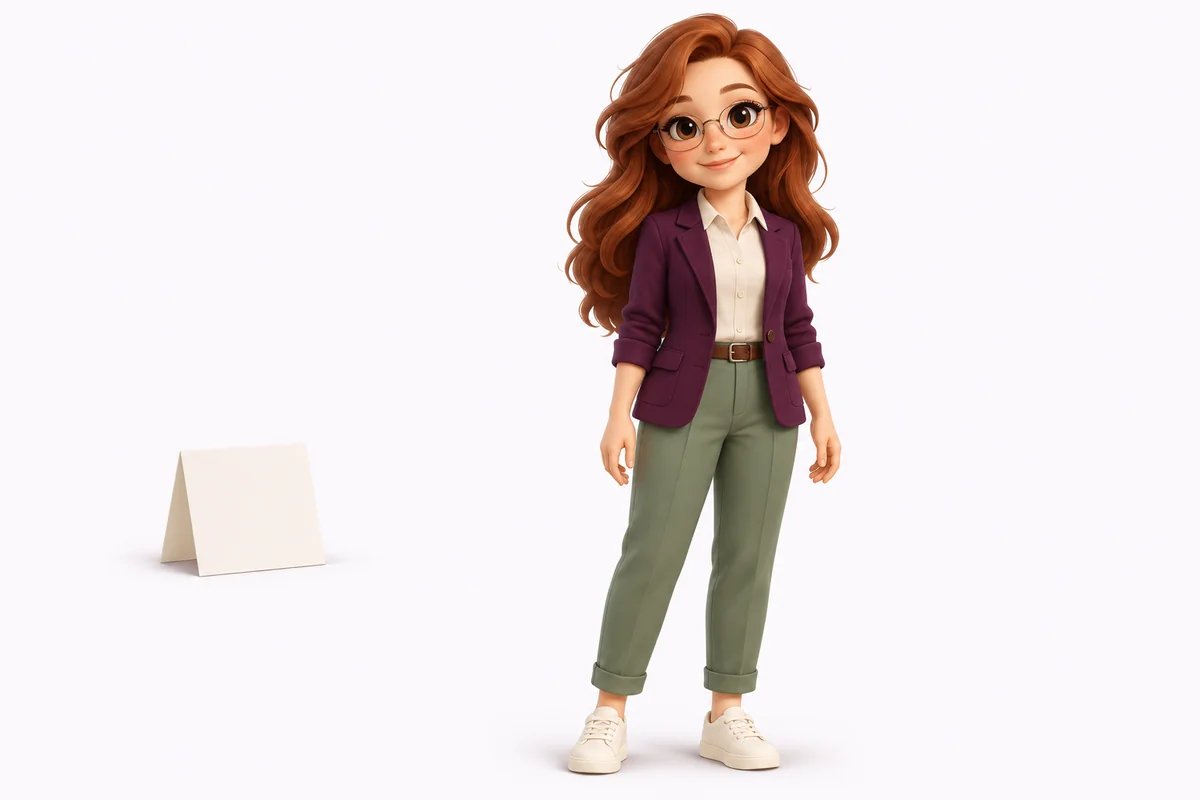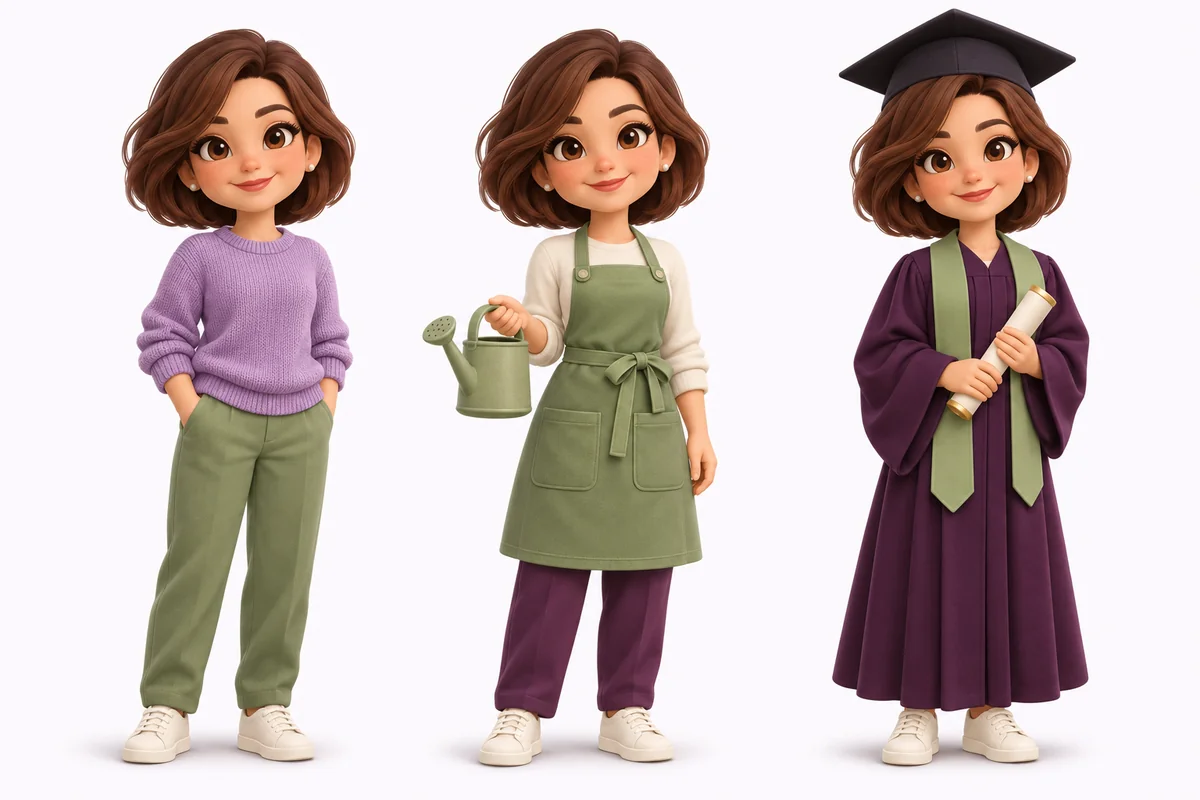
A doll portrait collection can follow one person through different outfits, interests or adult milestones. Each figure needs its own reason to be there. The graduation portrait might remember a finished course, while a later everyday look reflects the person they have become since.
Plan the collection as separate individual portraits. A group of examples on a shelf is not the same request as a single multi-person scene, and a collection does not need to be designed or purchased all at once.
Give the next portrait a different purpose
Before choosing another outfit, explain what the new figure would add to the story. Has a familiar hobby become more important? Does a career change deserve its own portrait? Is there a period that the existing figure does not represent?
A useful distinction can be quiet. An office look and a relaxed gardening outfit may show different parts of the same adult's life without needing a dramatic event. If the proposed figure only repeats an existing theme with a slightly different accessory, consider whether that difference matters enough to you.
The graduation keepsake guide offers one way to choose a milestone theme. A retirement portrait can give another period its own focus. You can use the same question for an ordinary period: which personal detail would make this portrait belong to that time?
For example, a hypothetical collection might include a graduation outfit, the jacket worn during the first year of work, and the clothes used for a much-loved weekend interest. The connection is one person's history, while the individual portraits remain easy to tell apart.
Choose a small number of things to keep consistent
Decide which visual choices should connect the collection. You might prefer a similar standing pose, comparable clothing colors or a consistent way of writing the accompanying notes. Keep that list short enough to leave room for the point of each new portrait.
Separate the person's current appearance from the period you are representing. A portrait of an earlier stage may intentionally use an older hairstyle or glasses. State that choice rather than assuming every new figure should match the latest reference.
- Keep consistent: the general portrait style you want to explore.
- Decide for each figure: the period, outfit and personal detail.
- Confirm afresh: the available size, design scope and final price.
If you want a new design to relate to an existing figure, provide a clear explanation of the relationship and ask the team what reference material is useful. A previous result can communicate your preference, but it does not guarantee that every later detail will be reproduced in the same way.
Keep a short record for each separate design
Use a plain note for each proposed portrait. Include its theme, the intended hairstyle and outfit, the reference you have chosen and the detail that must be discussed before purchasing. Do not rely on a file name alone to explain which period the image represents.
A simple planning note could read: "Weekend gardening, current hairstyle, sage jacket, relaxed standing pose. The small watering can is optional and needs confirmation." A later figure should have its own note rather than a new paragraph added to an older, already conflicting brief.
The public preview form currently has one image upload field. If a design needs more than one reference, prepare one clearly labelled combined image or contact the team about supplying the material. Keep separate portrait requests distinct; do not assume that several images or an increased quantity will automatically create a set of different designs.
The outfit note guide can help you describe a new look without changing the priorities in another portrait's brief.
Check the current options and the space between portraits
When you return for another figure, review the options offered at that time. An older order record is useful for your own reference, but it is not confirmation that a size, accessory request or other choice remains available unchanged.
Revisit the display location too. Decide whether the collection should read as a sequence or as individual objects placed near their own photographs and cards. The desk and shelf guide explains how to measure the usable space instead of estimating it from website illustrations.
Compare each emailed AI preview with that portrait's particular purpose before purchasing the physical figure separately. It is fine to add one portrait, keep it for a while and decide later whether another would contribute something different. The collection can develop around the moments you actually want to remember.