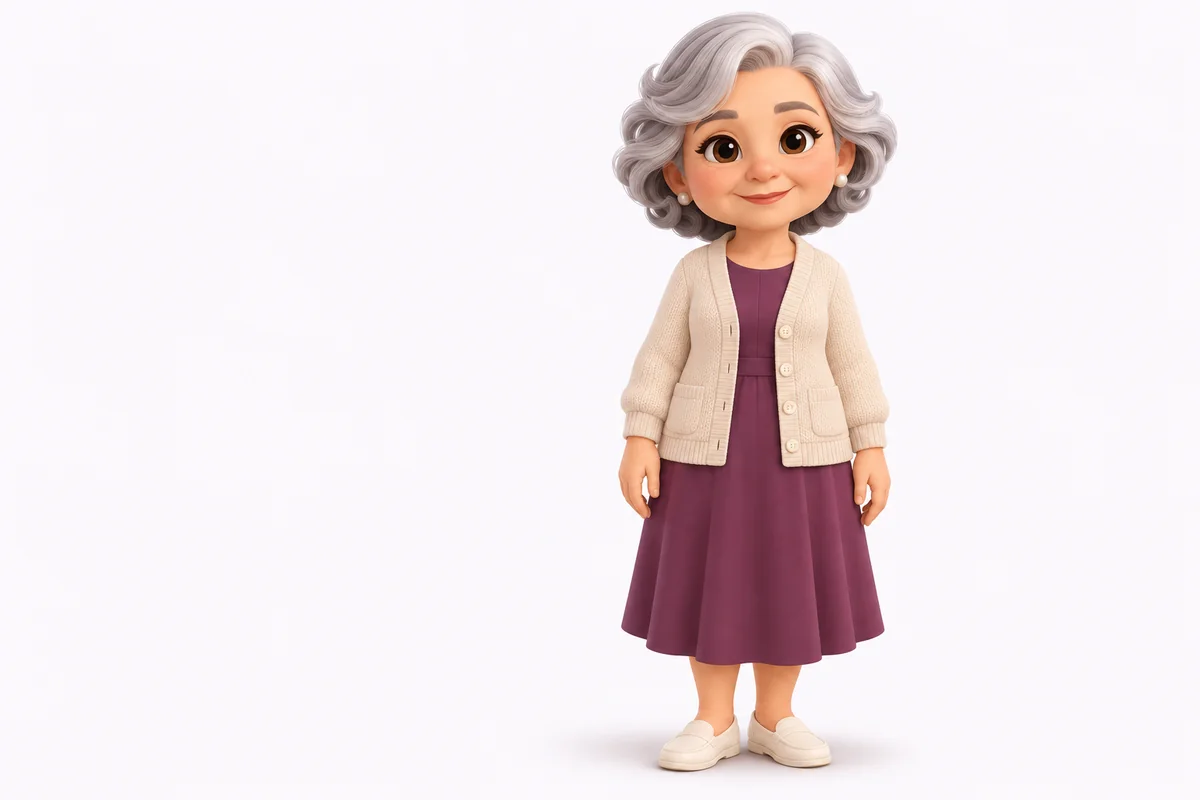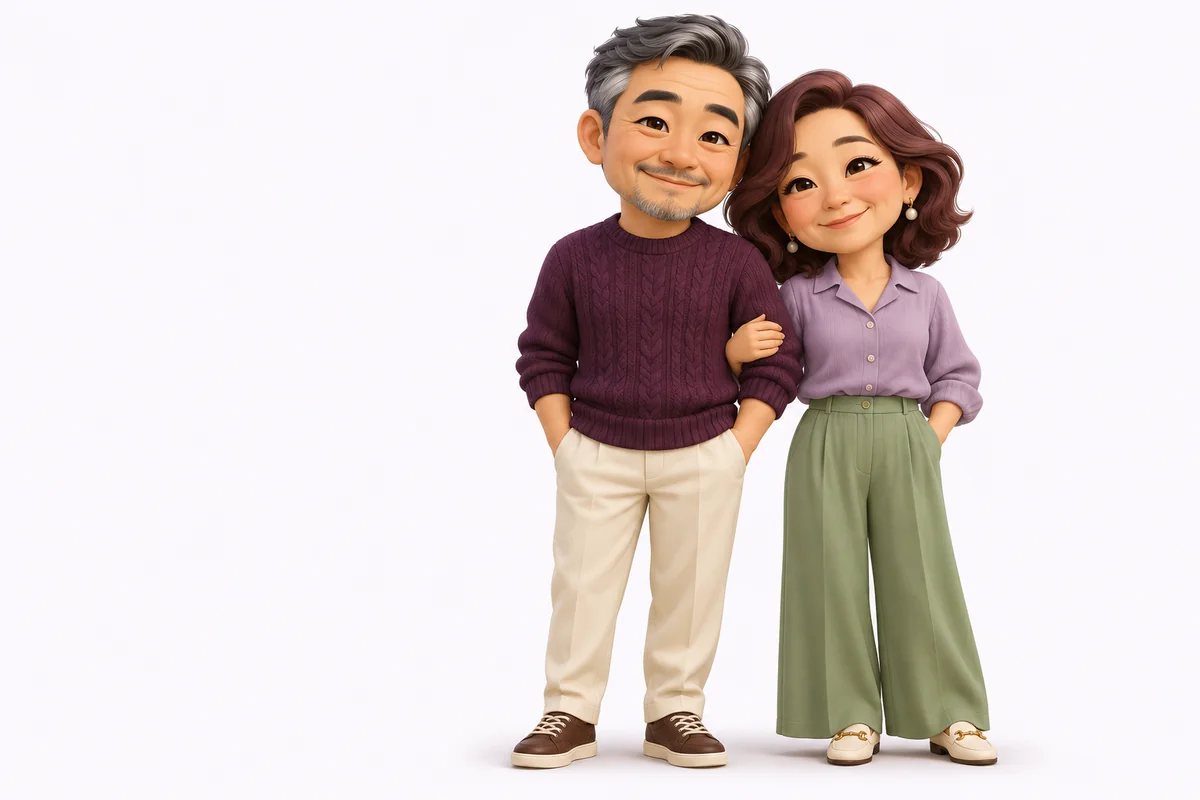
An anniversary can point backwards to the beginning of a relationship or towards the life you share now. A doll portrait becomes easier to plan when you choose which period it should represent. A first meeting, a trip and today's familiar outfits may all matter, but they do not have to become one combined scene.
Choose the memory first. Then use the figures, a shared pose and a short note to explain why that particular version of the two of you belongs in the gift.
Choose the year that gives the portrait a purpose
You might want to remember how you looked when you met, a trip that changed an ordinary routine, or a recent year that felt especially yours. The choice does not need to be the grandest event. It needs to be a period you can both connect with.
Ask what would make that memory recognizable without a lengthy explanation. It could be the coats you wore on a familiar walk or the clothes from a photograph you already keep in the house. If the meaning depends entirely on a complicated landmark, let the accompanying card describe the place rather than requiring a miniature version of it.
Write the year or occasion in your working notes. This helps you decide whether an older hairstyle is part of the memory or simply the clearest photograph you happen to have. You can change that choice, but make it deliberately instead of allowing conflicting references to decide for you.
Give each person a clear version of the story
For a portrait of an earlier year, describe the appearance you want for each person at that time. Do you want the clothing and hair from the old image, or the old outfits with your current hairstyles? Either is a design choice if you explain it.
Keep two separate lists before writing the shared brief. Name the hairstyle, glasses, main clothing pieces and important detail for the first person, then do the same for the second. Follow those notes with a sentence about their relative position and pose.
Here is a hypothetical direction for a couple who have chosen a past trip:
Use the outfits from the reference taken on our coastal walk. Keep the woman's short hairstyle from that year and the man's glasses. We should stand side by side with shoulders touching. The bags and scenery are optional.
The current request form has a single image upload field. If your references are separate, prepare one clearly labeled combined image or ask the team how to provide additional material. The separate-photo couple guide explains how to organize those choices without treating separate submissions as one automatic request.
Choose a pose that suits the memory
A connected pose can suggest an affectionate moment, while two people standing separately can leave each outfit more visible. Neither is automatically more romantic. Think about the photograph, the people and where you expect to display the portrait.
Use ordinary descriptions such as shoulders touching, one arm around the other person's back, or standing side by side with a small gap. Avoid relying only on words like romantic or natural, which leave the physical arrangement unclear.
Ask about a complex pose or an accessory that is essential to the idea before deciding on the final brief. A chibi design interprets the figures in larger-head, smaller-body proportions, so the preview should be considered as a stylized portrait rather than a precise photographic reconstruction. The detail selection guide helps you keep the main priorities clear.
Decide whether the gift is a surprise or a shared project
Designing together lets both people choose how they are represented. It can also make the anniversary itself part of the process: selecting a year, looking through a few photographs and agreeing on the details you each want to keep.
A surprise calls for fewer assumptions. Choose a memory and look you already know the recipient likes, then explain why you chose that moment in a separate card. Put the date and longer message there if they would otherwise depend on fine lettering on the figure.
The surprise gift planning guide offers ways to check preferences quietly. When the emailed design is ready, compare the two individual looks and shared pose before reviewing the physical options and final price. Keep the brief and card focused on the same year so the gift tells one clear story.